Top 3 Facebook Ad Content Errors That Cause Wasted Budget
Thu Huyen
532 views
Table of Contents
In the digital age, Facebook advertising has become a familiar tool for most businesses. However, not all content is effective. Just a small mistake in writing or presentation can make customers judge the brand as unprofessional.
Besides "superficial" errors like spelling or punctuation, many content creators – even experienced ones – still often fall into bad habits. Below are 3 basic groups of errors to avoid when creating advertising content on Facebook.
Thinking Errors
A weak foundation in thinking is the leading cause of ineffective advertising content. Many writers, especially newcomers, often create content based on intuition instead of marketing goals. Typical Mistakes:
- Unappealing Title: While 80% of an advertisement's success comes from its title, many articles still have bland, uninspired titles that fail to pique curiosity.
- Missing Call to Action (CTA): Readers may be 70-80% convinced, but without a call to action at the end, they will miss the opportunity to interact or make a purchase.
- Advertising Policy Violations: Especially in the beauty, medical, and health industries. Just a few violating words can cause ads to be restricted from distribution or affect the account.
- Over-focusing on ads: If the content is "blatantly" sales-oriented from the start, customers will easily ignore it. Instead, you need to skillfully suggest, guide, and create real value for the reader.
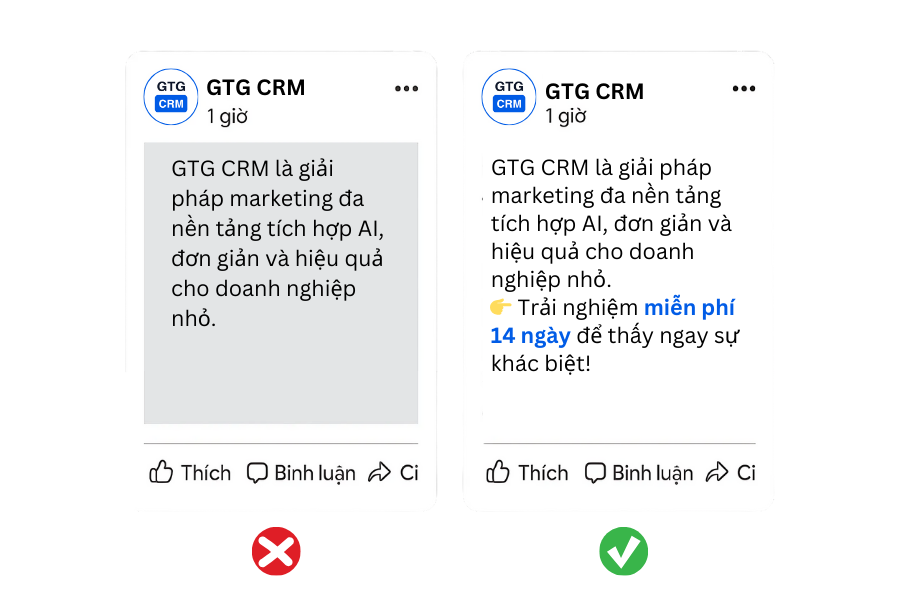
CTAs help stimulate more purchases
To avoid writing ads based on emotion and to build a campaign with clear goals from the start, you can refer to: The Best Facebook Ads Plan for Beginners in 2025 - A step-by-step guide from setting goals, choosing audiences to allocating budget.
Commentary Errors
Poor communication not only makes content unconvincing but also reduces the reader's experience. Some Common Mistakes:
- Stacky, formulaic writing: 10 identical articles only bore the customer.
- Lack of logic, disorganized: Ideas are not arranged in cause-and-effect order, lacking coherent arguments.
- Superficial or rambling writing: General language, lacking specific data or evidence. Or conversely, cramming too much information makes the reader forget everything.
- Wrong tone, wrong target audience: Not clearly defining the target customer (e.g., stay-at-home mothers, middle-aged people, office workers), leading to an unfamiliar writing style, making it difficult to connect.
If you're struggling to figure out where to start to write more persuasive advertising content, read more: 5 steps to create effective content that attracts tens of thousands of potential customers - guidance on how to research insights, structure messages, and clearly integrate benefits.
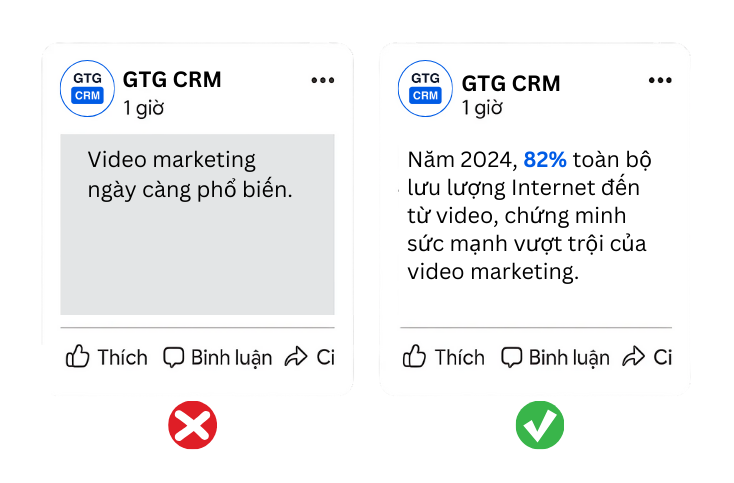
Data helps make articles more persuasive
Presentation Errors
The presentation style also contributes to the success of an advertisement. Good content, but poorly presented, will damage brand reputation.
- Spelling and grammar: A small mistake is like a "grain of sand in a bowl of rice," easily causing readers to lose interest.
- Incomplete sentences: For example, writing sentences without a subject and predicate makes the content disjointed.
- Overuse of icons: Emojis make content more lively, but using too many can be off-putting, especially in the B2B or technology fields.
- No paragraph breaks: Most users have a habit of skimming. An article that is too long and not clearly divided into paragraphs will cause them to quickly skip it.

Breaking paragraphs makes it easier for users to read
Conclusion
The three groups of errors above – thinking, expression, and presentation – are “traps” that both newcomers and experienced content creators can fall into. To make your Facebook ad content truly effective, cultivate the right mindset, write clearly, and present it professionally.
After optimizing the content, the next step is to choose the right ad format for maximum effectiveness. You can continue learning at: Top 7 Most Popular Basic Facebook Ad Formats - a compilation of important ad formats and how to apply them for small businesses.
Maybe You Should Read These
The Most Effective Way to Attract Leads and Take Care of Customers on Zalo Official Account
Not targeting the right people? 4 steps to create customer portraits with GTG CRM

Create SEO-standard Landing Page to attract potential customers with GTG CRM

GTG CRM: Customer management solution to increase loyalty and optimize sales efficiency

Master multi-channel social media, grow easily with GTG CRM platform