The best Facebook advertising plan for beginners 2025 [Free set of 8 sample sheets]
Thu Huyen
532 views
Table of Contents
If you are new to Facebook advertising, you must have heard many stories of “burning money” without seeing results. The main reason is not because Facebook is difficult or the algorithm is too complicated, but because there is no clear plan. Running Ads without a plan is like going to war without a map, you can spend all your budget but do not know where you are going and what the final result is.
Why do you need a Facebook advertising plan?
A plan is not just a list of things to do. It's a tool that helps you see the big picture: what the campaign goals are, where the target audience is, how the budget should be allocated, and what data needs to be tracked to evaluate effectiveness.
For beginners, having a plan is like having a "guide," avoiding the feeling of confusion when faced with dozens of choices when setting up a campaign. For experienced users, planning is a way to compare, optimize, and gradually improve each stage.
Sample Facebook Ads Plan: 8 Sheets for Newbies
To help you avoid starting from scratch, we have referenced and compiled a sample plan consisting of 8 sheets on Google Sheets. The great thing about this set is that it not only records information but also guides you step-by-step like a smart checklist.
Sheet 1: Plan Overview
The first sheet is the plan overview, where you set goals, estimate budget and implementation time. Once this step is clear, everything that follows will be more coherent and easier to control when running the ads.
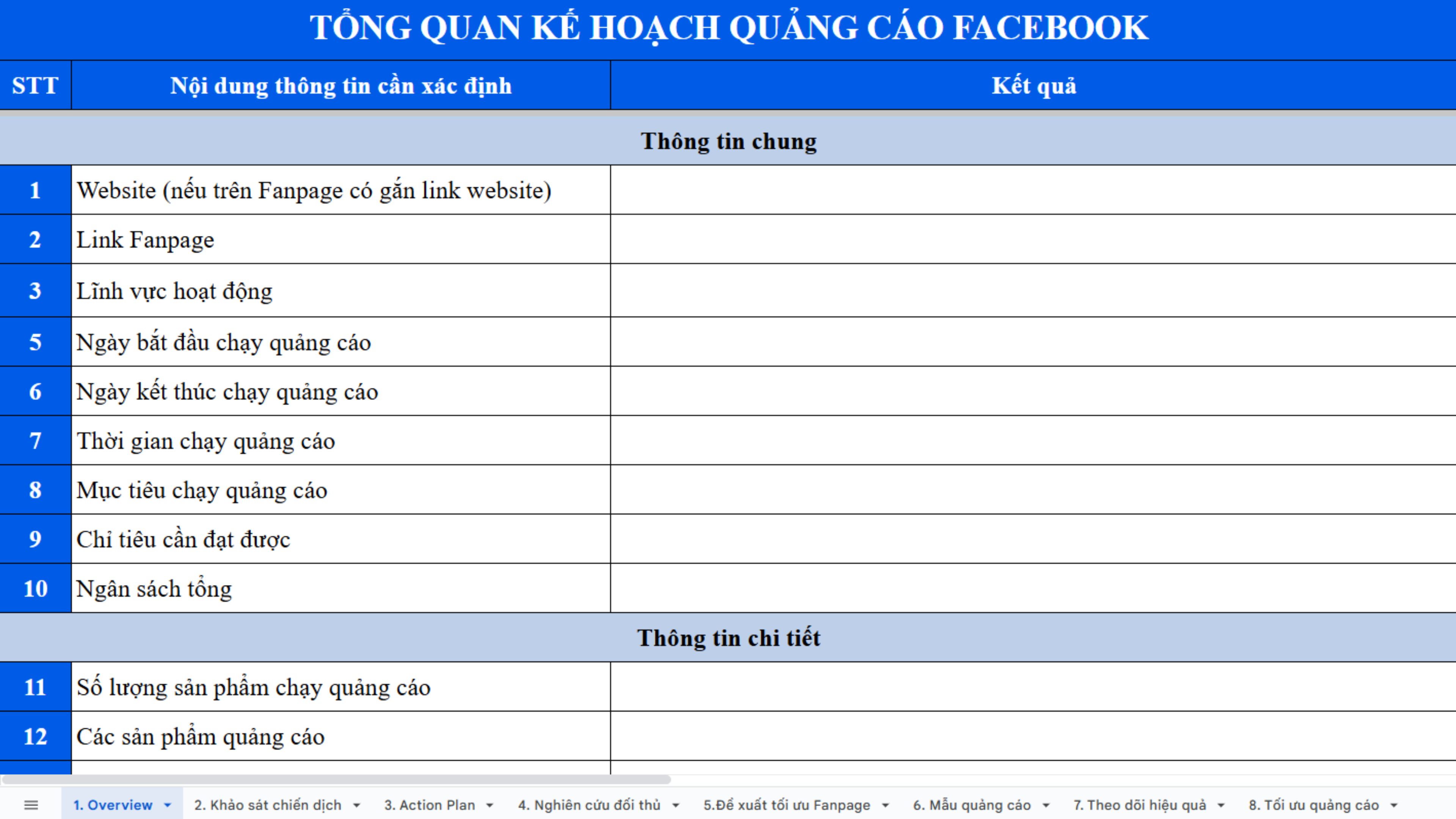
Overview of Facebook Ads Plan
Sheet 2: Campaign Survey
The information used in the campaign setup process acts as a handbook. New users often forget their target audience, daily budget, or display location. Centralized storage helps you avoid remembering too many details; just open the sheet and you'll find the information you need.
Sheet 3: Action plan
When you get to the detailed plan for each implementation phase, you will see the difference. Instead of just clicking “create ad” and letting it run, you have a clear strategy: a testing phase to see which audience responds well, a scaling phase to increase the budget, and finally remarketing - the phase that brings sustainable revenue.
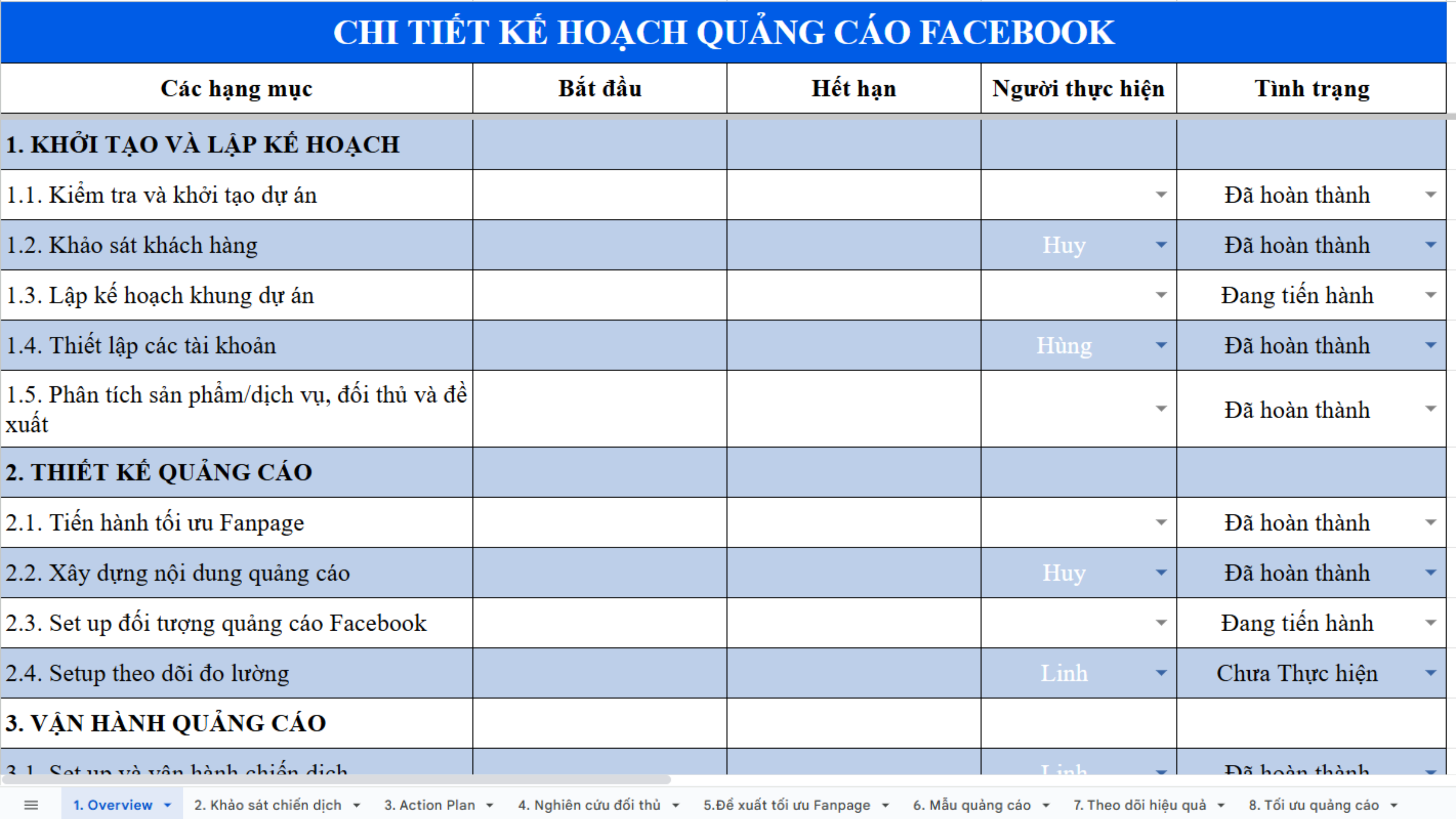
Details of the Facebook Ad Plan
Sheet 4: Target Research
Another important point is competitor research. This sheet helps you systematize what you observe from your competitor's Facebook Ad Library or fanpage. Not to copy, but to learn how they communicate, compare their strengths and weaknesses, and find gaps for yourself.
Sheet 5: Optimize Fanpage
Many people forget that the fanpage is the “first landing page” that customers see. A fanpage lacking information and with sparse content will reduce advertising effectiveness, no matter how precisely you target.
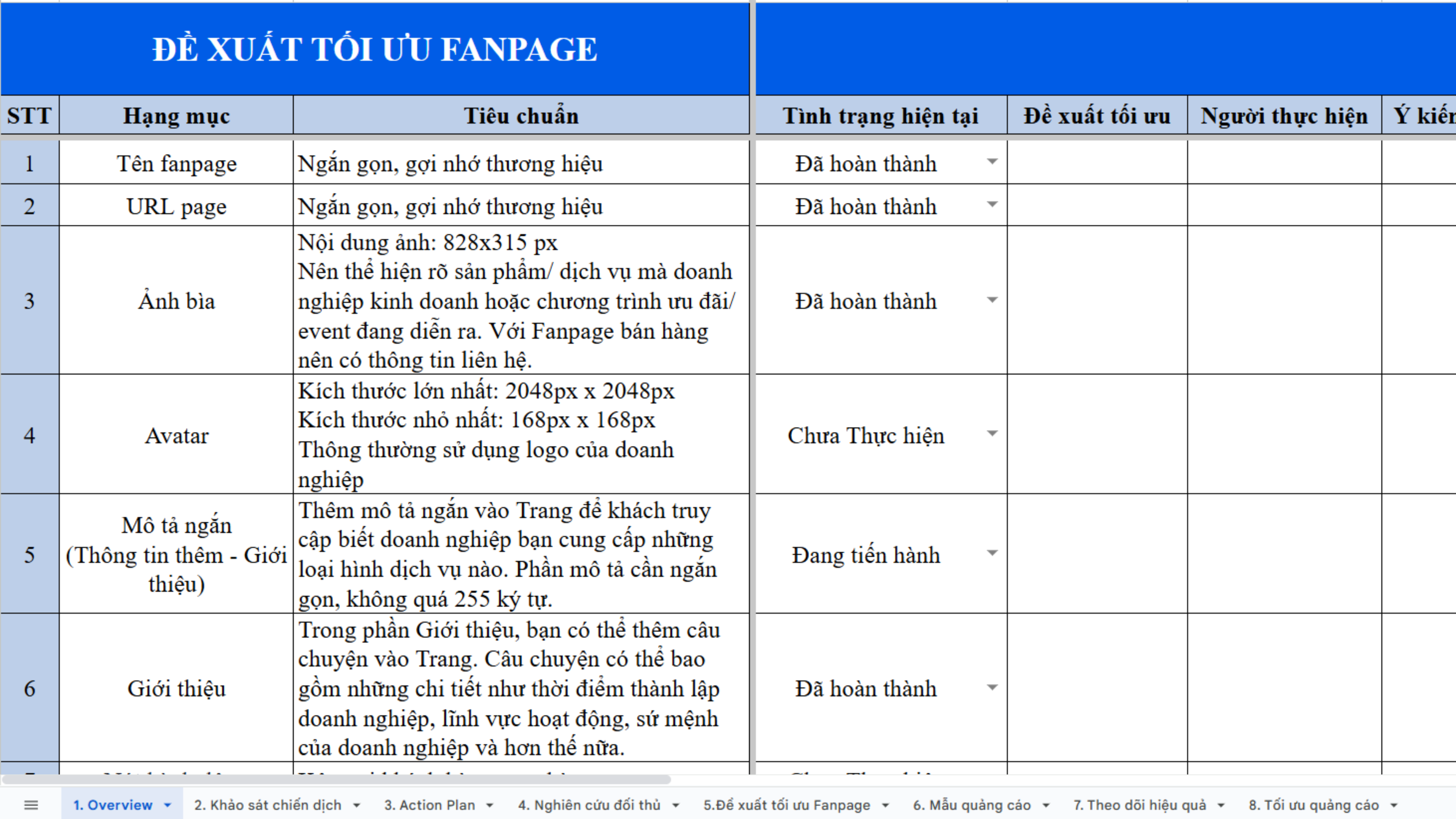
Fanpage Optimization Suggestions
Sheet 6: Content Template Facebook Ads
The Facebook Ads content template section is where you are given suggestions for headlines, main content, and calls to action. It's like a "template" to prevent you from running out of ideas, and at the same time avoid basic mistakes that cause ads to be rejected.
Sheet 7: Tracking Effectiveness
Once the campaign is running, you will need to track and measure the results. This sheet not only records CPC, CTR, or CPM, but also allows you to see the changes on a daily basis. This is extremely important to know when to keep things the same and when to change them.
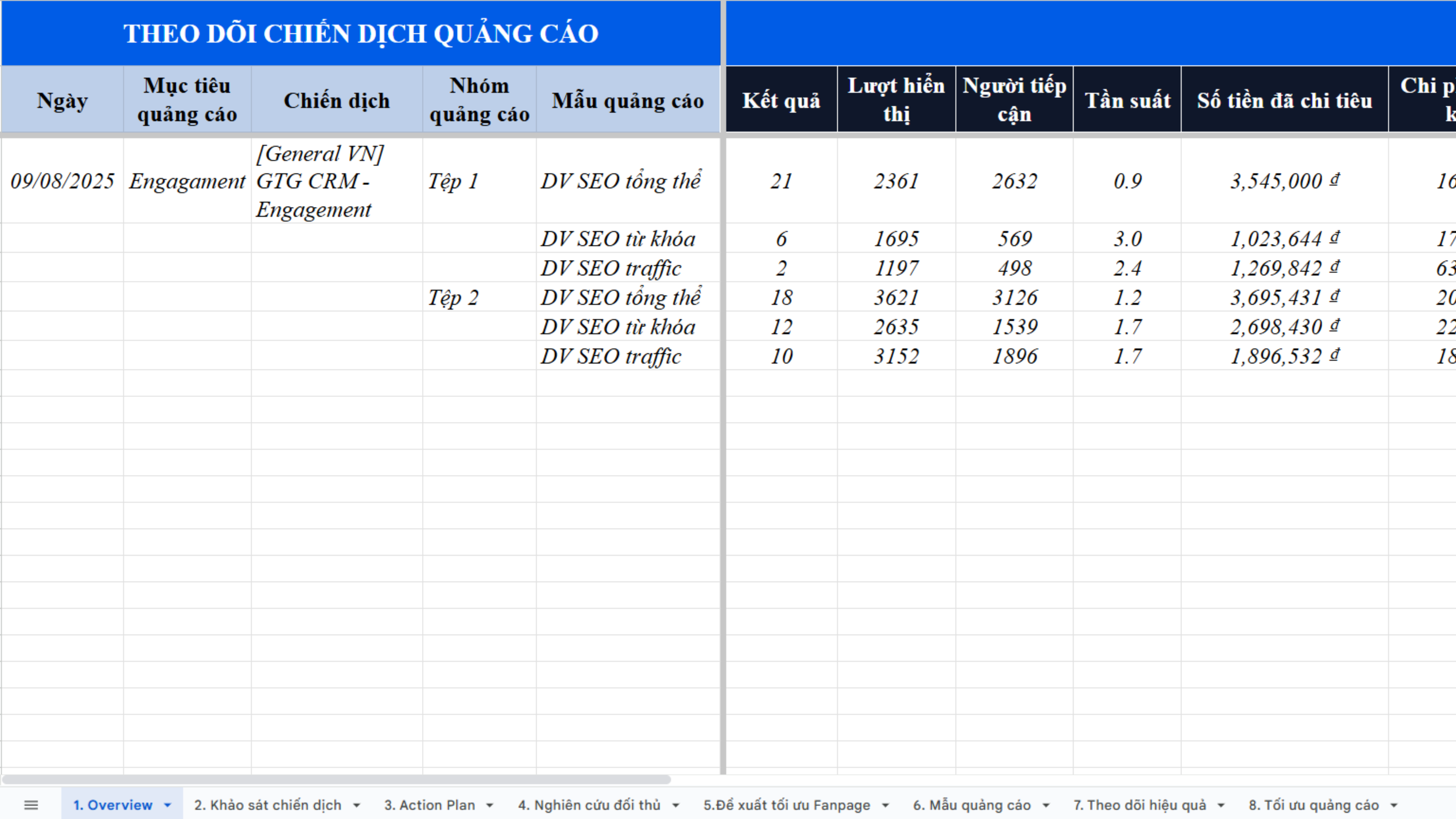
Track performance
Sheet 8: Optimize ads
Finally, the campaign optimization sheet summarizes the entire process. The rules for enabling/disabling ad sets, scaling times, or stopping are recorded so that you don't have to start from scratch next time. This is also your "memory," helping each subsequent campaign to be better than the previous one.
How to maximize the plan This
When downloading, spend at least 30 minutes filling in the information carefully.
Don't think of it as a waste of time; in fact, you're saving a lot of money by avoiding mistakes
during implementation. After running, get into the habit of regularly recording data; it only takes a few minutes each day but will give you a clear picture after 1-2 weeks. And especially, don't ignore remarketing,
where many newbies often forget but it's a goldmine for revenue.
Conclusion
Facebook Ads isn't difficult; what you need is a clear plan to avoid getting lost. The 8 sample sheets will be a solid starting point, helping you grasp the structure and implementation mindset from the very beginning. Having a detailed plan in hand will make you
more confident, save budget, and know how to optimize each campaign to turn advertising into real revenue.
Maybe You Should Read These

7 steps to create a detailed Digital Marketing plan from A-Z

Not targeting the right people? 4 steps to create customer portraits with GTG CRM

Discover how GTG CRM turns emotional selling into a professional closing system
5 Important Keyword Match Types in Google Ads and How GTG CRM Helps Manage Them Effectively

Remarketing Tips: Turn Potential Customers into Real Customers