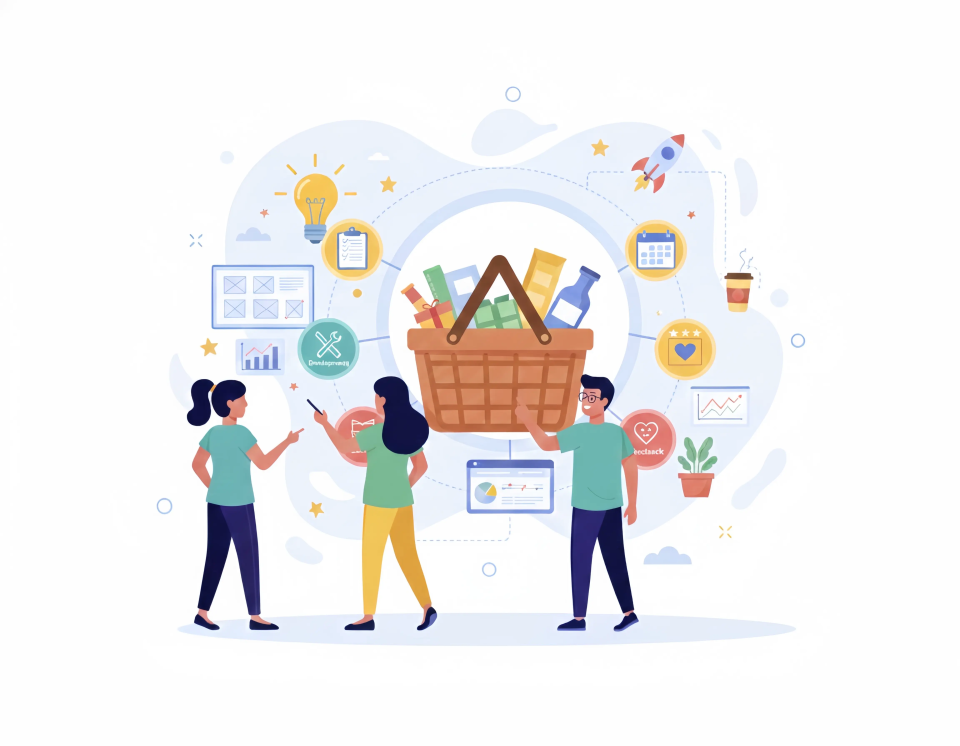
Do you need to register your business to sell goods? What are household registration and contract-based household registration?
Alex
532 views
Table of Contents
After reading this article, salespeople will learn:
- ✅ When is business registration required, and when is tax registration sufficient?
- ✅ Differentiating between households that declare their income and households that pay taxes under the lump-sum system.
- ✅ Business types: offline, online, property rental
- ✅ Regulations on accounting procedures for household businesses from 2026
1. Do I need to register my business if I sell online?
Case 1: Online sales only (no physical store)
According to regulations: Business registration is not mandatory, but tax registration is required .
If you:
- Selling through Facebook, Zalo, and TikTok.
- Sell on e-commerce platforms (Shopee, Lazada, TikTok Shop)
- No fixed business location.
→ You need to go to the Tax Office in your place of residence to register for taxes. Your tax identification number is your Citizen Identity Card number.
Important note
Although business registration is not mandatory, some local tax offices still require a business license before tax registration.
Advice: Contact the Tax Office in your area of residence directly to inquire before proceeding.
Case 2: Having a store or business location
Business registration is mandatory at the People's Committee of the commune/ward where the business is located.
Procedure:
- Submit your business registration application to the People's Committee of the commune/ward.
- Receive the Business Registration Certificate (with business registration number).
- This number also serves as the tax identification number for the business household.
Case 3: Renting out assets (house, car, equipment, etc.)
Business registration is not required , only tax registration.
However, similar to online sales, requirements may vary from place to place.
2. What is the difference between households that declare their income and households that pay taxes under the lump-sum system?
These are two different tax calculation methods for sole proprietorships:
| Criteria | Household declaration | Contract farming |
|---|---|---|
| Object | Revenue > 500 million/year | Revenue ≤ 500 million/year |
| Tax calculation method | Self-declaration of actual revenue | The tax authorities set a fixed tax rate. |
| Tax filing period | By month or quarter | By year (as notified by tax authorities) |
| Bill | Electronic invoices must be used. | Optional |
| Accounting books | Records must be kept. | Simpler |
| Digital signature | Required | Optional |
Example: Ms. Lan sells cosmetics
Situation 1: Ms. Lan sells online via Facebook, with an annual revenue of approximately 300 million VND. → Ms. Lan belongs to the group of households subject to lump-sum payments or declaring income on a transaction-by-transaction basis.
Situation 2: Ms. Lan opens a shop with an annual revenue of 800 million VND. → Ms. Lan belongs to the group of taxpayers who must declare taxes quarterly and use electronic invoices.
3. What about selling through e-commerce platforms?
When you sell on e-commerce platforms with payment functionality (Shopee, Lazada, TikTok Shop...), the platform will:
- ✅ Direct tax deduction on each order
- ✅ We pay your taxes to the state budget on your behalf.
This means: For the portion of revenue that has already been subject to deductions, you do not need to file a tax return again .
But please note:
If you sell both through online marketplaces and off-platforms (Facebook, Zalo, your own website, etc.), then:
- Deductible floor area → No declaration required
- Off-exchange sales → Must declare taxes themselves
❓ Question: If year-end revenue is below 500 million VND, is it possible to get a refund of deducted taxes?
If your total annual revenue is under 500 million VND (which qualifies you for tax exemption), but the platform has already deducted tax during the year → There are no specific guidelines for tax refunds yet; you need to wait for new regulations.
4. Accounting regulations for household businesses from 2026
Key new features
From 2026, household businesses will be required to maintain accounting records (keep accounting books), depending on their revenue group:
| Group | Annual Revenue | Number of accounting books |
|---|---|---|
| Group 1 | ≤ 500 million | 1 sample ledger (revenue register) |
| Group 2 | > 500 million - 3 billion | 1 sample notebook |
| Groups 3 and 4 | > 3 billion | 4 notebook templates |
Good news: The accounting system for sole proprietorships is very simple, not as complicated as for businesses. You don't need to know journal entries or accounting principles to do it.
Do sole proprietorships have to submit financial statements?
No. Financial statements only apply to companies/businesses.
5. Who is eligible to work as an accountant for a sole proprietorship?
According to regulations, the following individuals are permitted to work as accountants for sole proprietorships:
- ✅ Business owner
- ✅ Father, mother, wife, husband, children, siblings of the head of household
- ✅ Managers and operators at household businesses
- ✅ Warehouse manager, cashier (dual role)
- ✅ Outsourced accounting or accounting service provider
In other words: Almost anyone can be an accountant for a sole proprietorship, as long as the owner agrees.
6. Open a bank account for the business household.
If you have a business license:
Bring your Business Registration Certificate to the bank to open an account in your business name.
If you only have tax registration (online sales):
Bring your Tax Registration Certificate to the bank to open an account.
Checklist: Starting a Business the Right Way
- Identify the type of business: Online sales / With a physical store / Property rental
- Contact your local tax office to inquire about registration requirements.
- Register your business (if necessary) at the People's Committee of the commune/ward.
- Register for tax and receive a tax identification number.
- Open a separate bank account for your business.
- Learn about tax filing obligations (read the next article)
Common mistakes
Thinking that selling online doesn't require any registration → Wrong! You still need to register for tax purposes.
Using a personal account for business → It's advisable to open a separate account for easier management and transparency during tax audits.
Not keeping purchase receipts → If you are a household required to declare expenses, you need receipts to prove deductible expenses.
Ignore sales revenue outside the exchange → The exchange only deducts tax for sales made on the exchange; you must declare the rest yourself.
7. Summary
Both online and offline sales involve tax obligations and financial management responsibilities. Understanding when business registration is required, when only tax registration is needed, and familiarizing oneself with the applicable tax management methods will help sellers avoid legal risks and operate their businesses more sustainably. In the context of increasingly popular multi-channel sales, manually managing orders, revenue, and cash flow can easily lead to errors. GTG CRM supports sellers in centrally managing orders from multiple channels such as e-commerce platforms, social media, and their own sales channels, while also aggregating revenue and generating reports for tracking and tax declaration purposes. This is a solution that helps sellers conduct business effectively while complying with current regulations.
GTG CRM helps you manage orders from multiple sales channels (Shopee, Lazada, Facebook, etc.) in one place, automatically calculates revenue, and generates reports for tax declaration purposes. Learn more →
Maybe You Should Read These
Revealing How to Optimize Online Business Process for Household Appliance Shop Owners
Tax filing guide for new sellers
Guide to Registering a Household Business: Process, Documents, and Things You Need to Know
At what revenue level is tax payable?

Practice: Self-declaring taxes using the HTKK software.
Electronic invoices: When to issue them, and how to handle errors.

Top 03+ lean business models "reign" during economic recession
Year-end tax peak: Businesses and household businesses face pressure from "self-declaration and self-payment".
Challenges and opportunities in the era of "self-declaration and self-payment"

Revealing business secrets that make startups successful
7 steps to create a detailed Digital Marketing plan from A-Z