Popular Facebook Ad Objectives to Increase Conversions and Sales
Thu Huyen
532 views
Table of Contents
When starting to run Facebook ads, many people often wonder: which campaign to choose, what is the goal, do you need to run many at the same time? In fact, there is no general formula, but depending on the product and resources, each business will need its own implementation. The important thing is to clearly understand the nature of each goal to save testing time and avoid waste.
This article will analyze commonly used goals, with practical examples for your reference.
If you are unfamiliar with the different ad formats, you can read more detailed instructions at Top 7 Most Popular Basic Facebook Ad Formats before choosing a goal.
Achievement: Brand Awareness
Brand awareness is a group of campaigns at the “top of the funnel,” helping the product or service reach as many people as possible. Main Objectives usually are:
- Maximize the number of people who see the ad: Most commonly used when wanting brand coverage.
- Maximize impressions: Repeated ads to increase memorability.
- Improve ad recall (Ad Recall Lift): Suitable for businesses needing long-term brand building.
- Maximize video views (Thruplay): Used when wanting to promote the message through video.
- Interaction with posts
- Video views (Thruplay)
- Join the community group
- Response to events
- Maximize messages
- Maximize purchases via message
- Sponsored messages
- Maximize calls
- Maximize page likes
- Collecting data via direct forms on Facebook/Instagram
- Increasing leads via messaging
- Increasing leads via Instagram chat
- Maximizing direct calls
- Increasing leads visiting the website
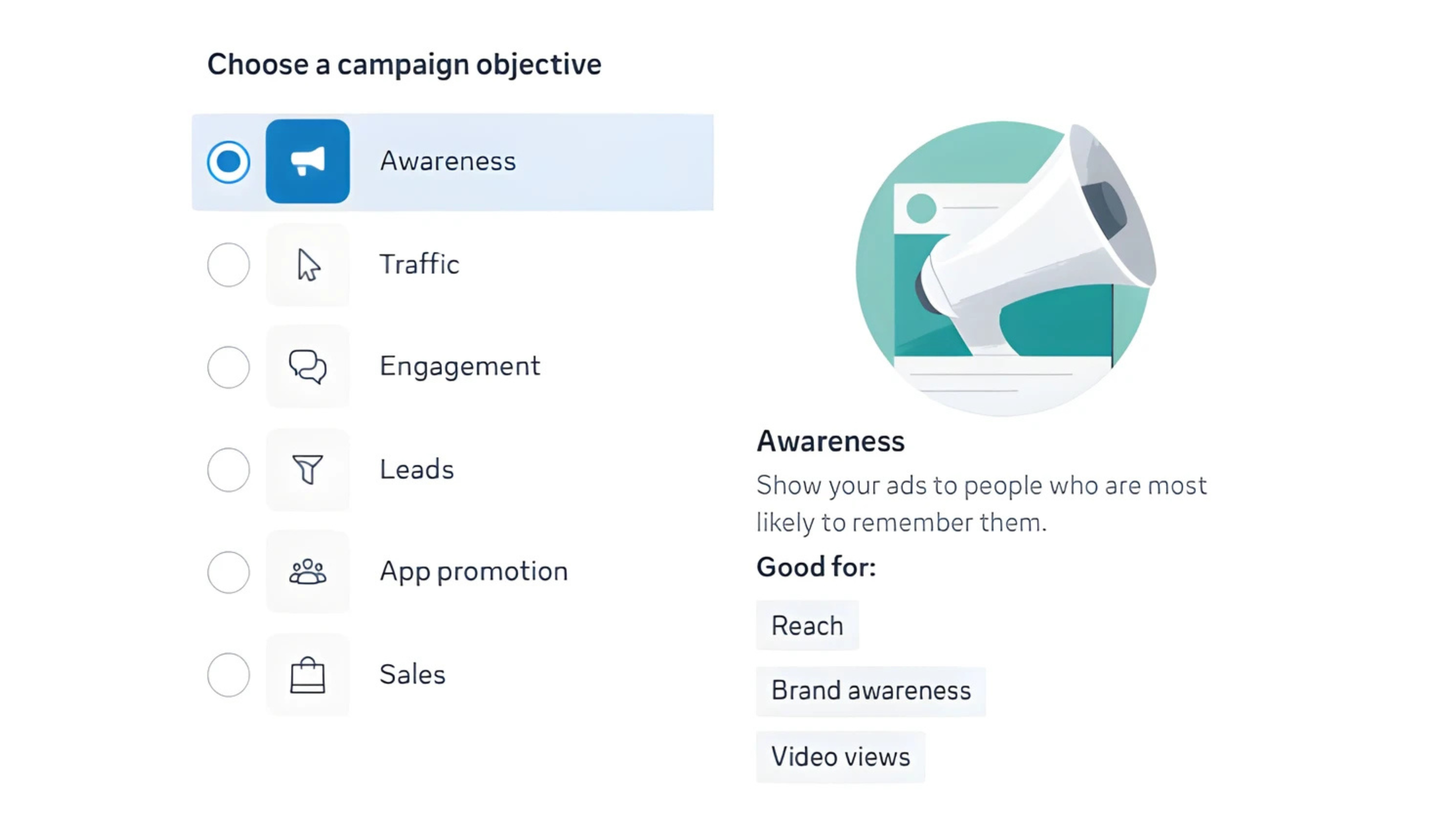
Brand Awareness Campaign
Example: A newly launched fashion brand will often run a “Reach” campaign to widely promote its products. Or for F&B brands, running promotional videos for food with the goal of "ThruPlay" helps them create a customer base of those who have watched the video, thereby facilitating remarketing in a later stage.
The strength of this campaign is that it helps customers become familiar with the brand, but it's important to note: awareness campaigns rarely generate direct orders; they only serve as a foundation for subsequent steps.
Traffic Goal
Unlike awareness campaigns, traffic campaigns aim to drive customers to a website, landing page, or a platform that you control. This is how you both introduce your product and collect behavioral data.
For example: a language center can run ads to drive traffic to a landing page for consultation registration. Here, they attach pixels to collect data, then run remarketing to the group of people who have visited but haven't left their information.
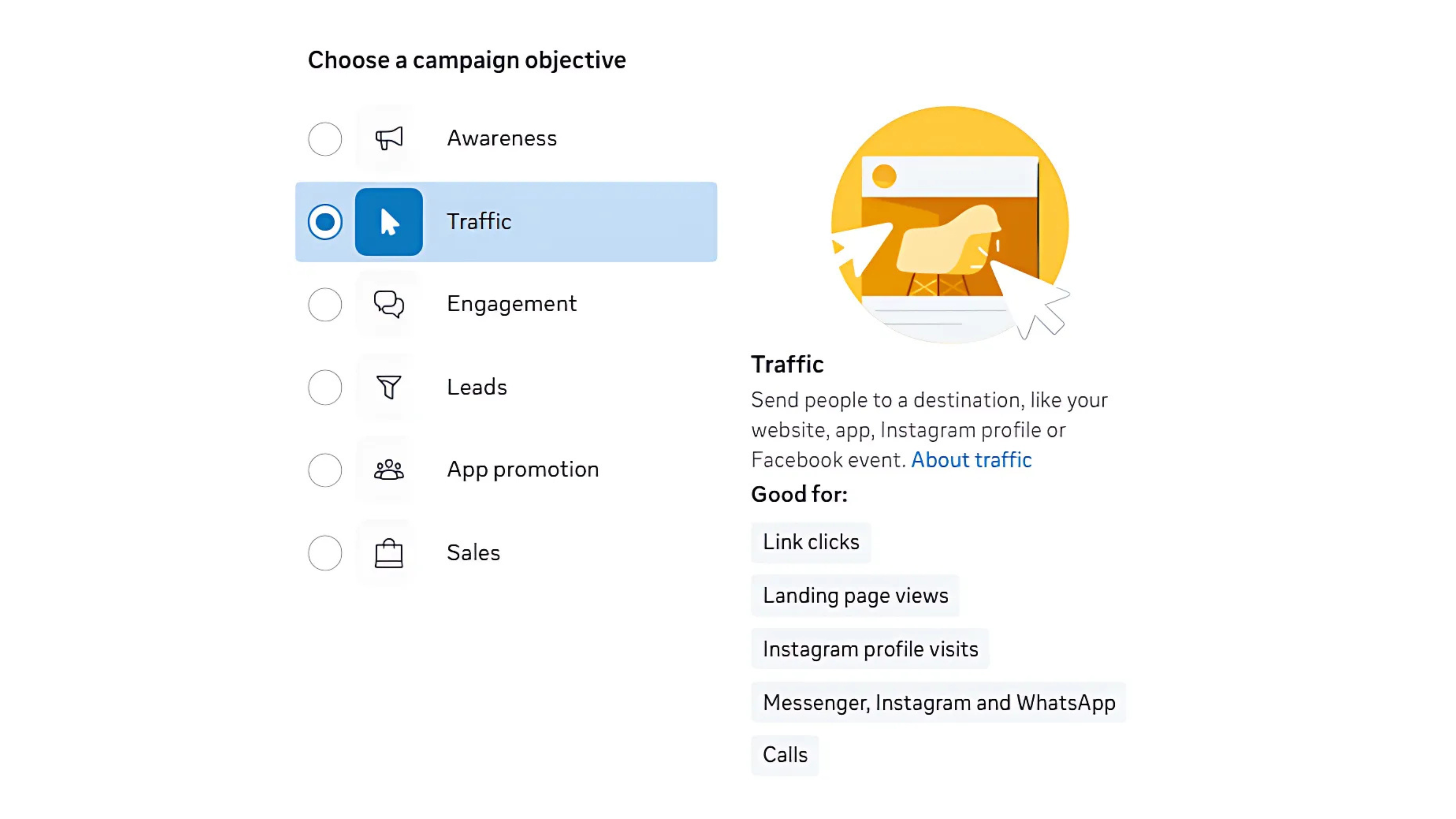
Traffic Campaign
Notable point: the goals “Link Click” and “Landing Page View” seem similar but are actually very different. “Link Click” might simply be a user clicking on a link but leaving immediately, while “Landing Page View” is optimized for those who actually successfully load the page. This is a small detail but directly affects the quality of the data you collect.
Engagement Goal
An ad with many likes, comments, and shares usually creates a much more trustworthy feeling than one with only a few views. That's why engagement campaigns are always used by advertisers to beautify the surface of fanpages, increase trust, and attract potential customers.
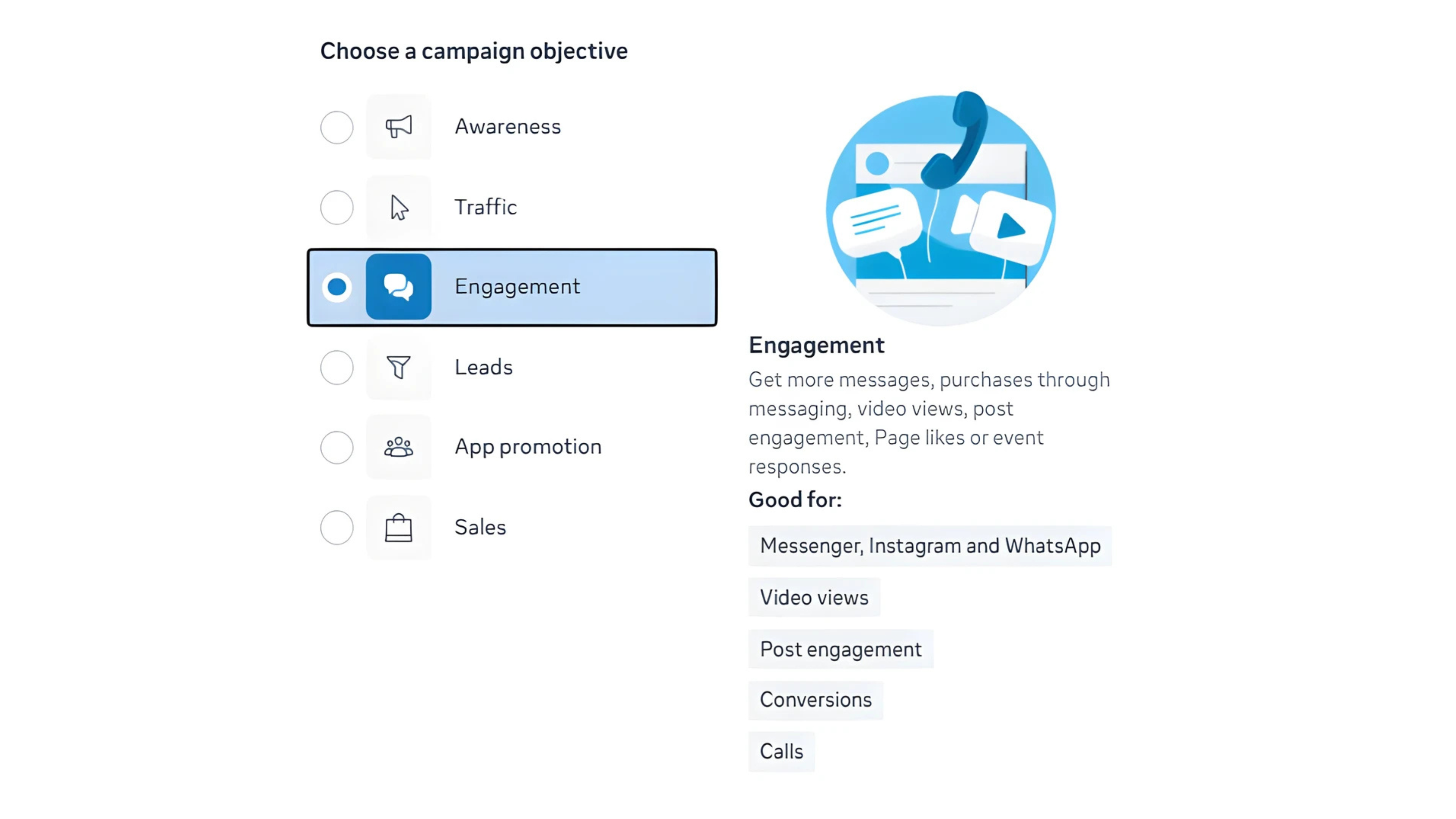
Engagement Campaign
Common goals include:
It's important to note that interaction does not equate to conversion. If you only focus on likes and comments without a follow-up remarketing plan, the campaign will struggle to generate real sales.
Lead Generation Objective
This campaign is suitable for businesses that need to collect data to nurture and care for their customers. It's commonly seen in education, services, B2B, or real estate.
Common goals include:
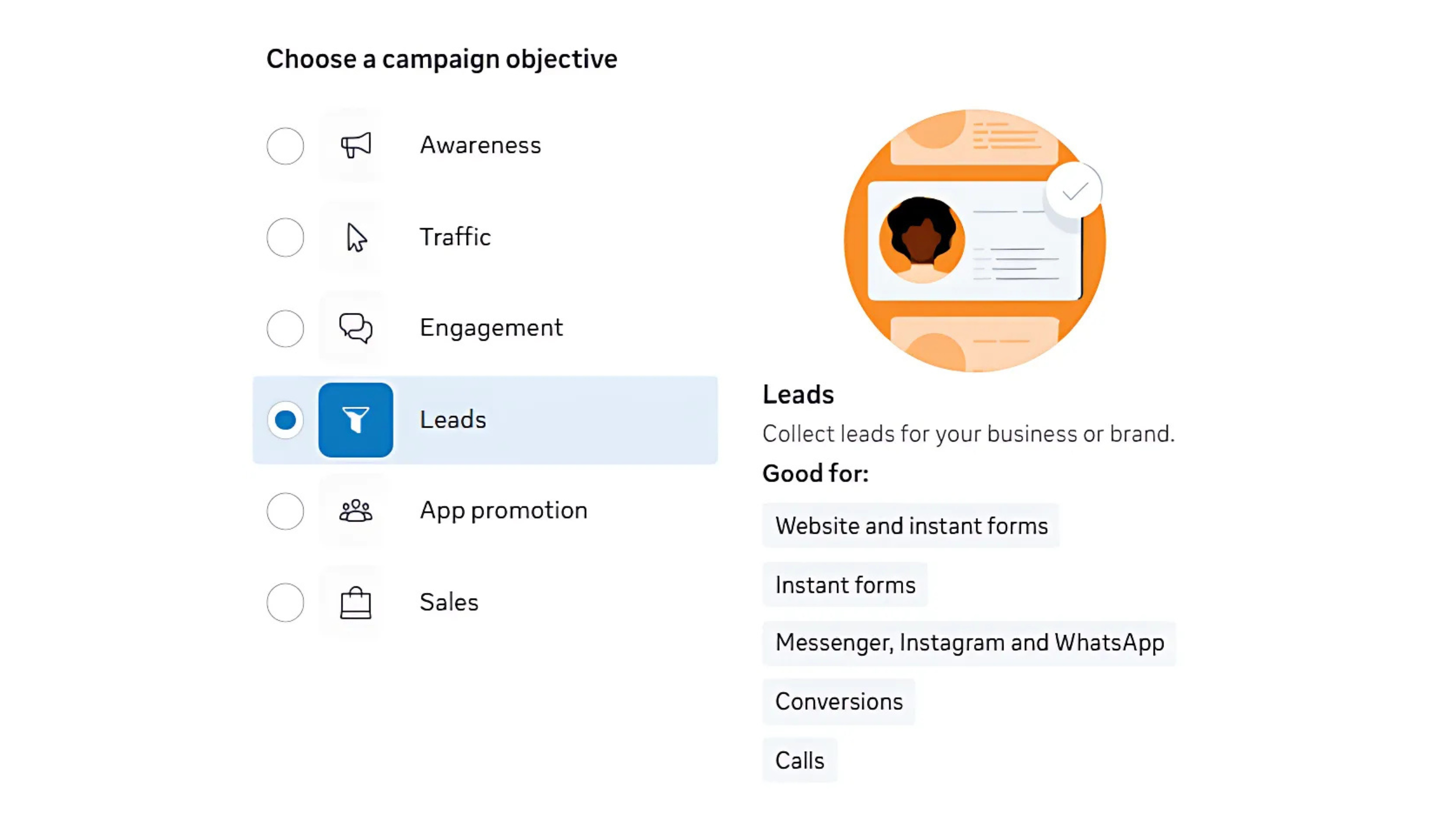
Lead Generation Campaign
The advantage of this type of campaign is that Facebook provides the form directly on the platform, allowing customers to fill it out faster. However, the disadvantage is that the quality of the data is sometimes low because users fill out the information just to "check it out," not because they actually have a need. Therefore, many businesses combine lead forms with telemarketing or email automation to filter quality leads.
If you are experiencing problems with bad leads or significant lead loss during the nurturing process, you can refer to the following article: No more forgotten leads: Automate management, increase conversion rates by 3 times.
Sales/Conversions Goals
This is the most important group of goals because it is directly linked to revenue. Businesses can optimize for Conversions (purchases, form submissions, service registrations) or Value (order value). For example, an online shoe store often chooses the "Purchase" objective so that Facebook optimizes to the people most likely to buy. A high-end furniture brand might choose “Value Optimization” to prioritize customers with high spending power, instead of just counting the number of orders.
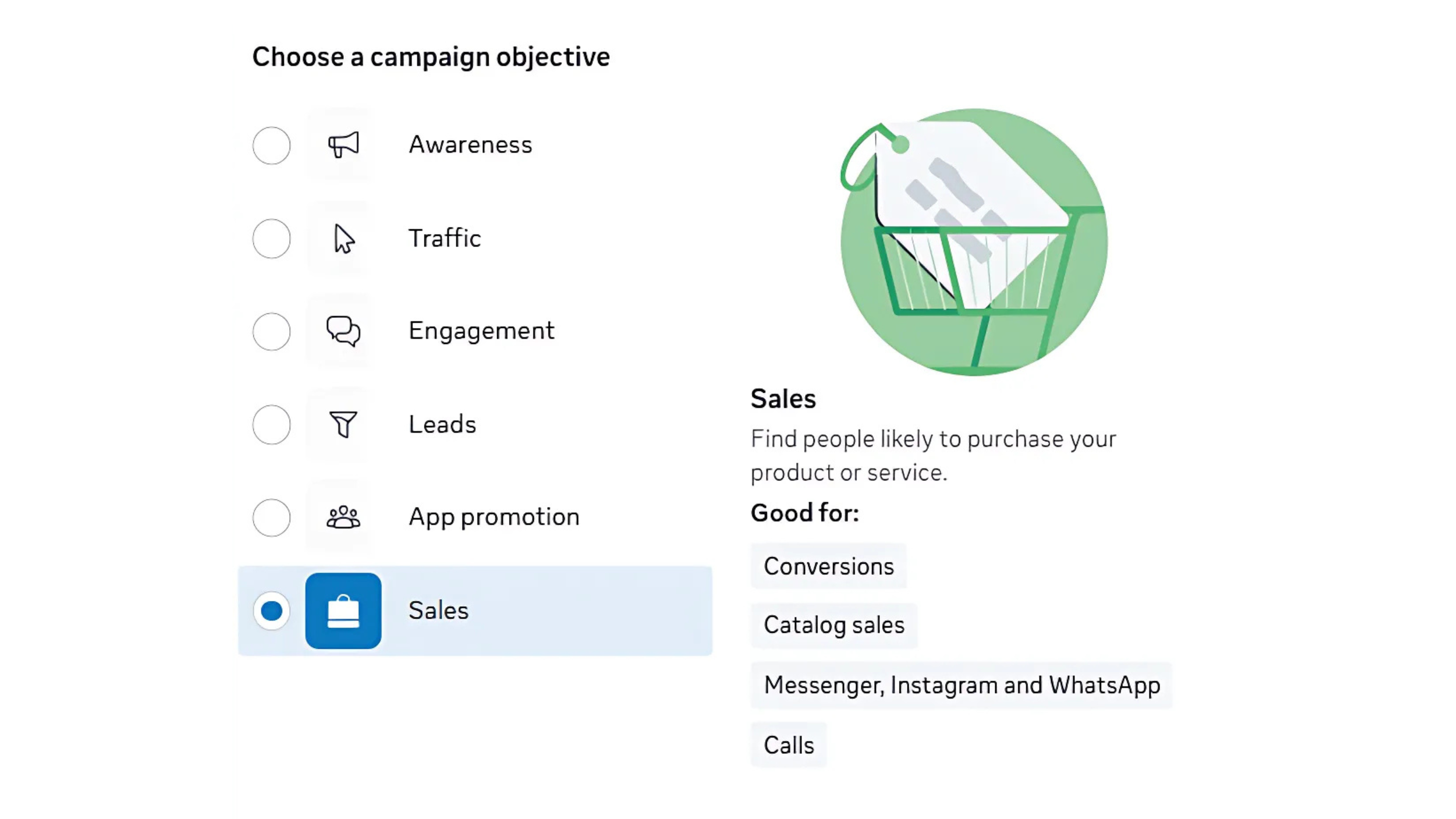
Sales/Conversions Campaign
The key point here is data. If the pixel hasn't collected enough conversion data, the algorithm won't optimize well. Therefore, many advertisers often follow the path: awareness → traffic → lead → conversion. This approach helps build the audience step-by-step, before closing the deal in the final stage.
Conclusion
There is no single "best" goal for every situation. Brand recognition helps the brand become known, traffic brings customers to your platform, interaction builds trust, lead generation collects data, and conversion is the final stage of closing the deal.
It is crucial to understand your product, customers, and resources to choose the right goal at the right time. An effective advertising campaign is not just based on a ready-made formula, but on the ability to flexibly combine goals to build a complete marketing funnel. At that point, advertising not only was spending money but actually became a lever for sustainable revenue growth.
If you're just starting out and need a clearer implementation roadmap, you can refer to this article: Secrets to Effective Facebook Ads for Beginners Right From the Start
Maybe You Should Read These

Update new consumption trends in Vietnam in the period 2025 - 2030

Smart Marketing Solution for SMEs: Cut Costs, Maximize Efficiency with GTG CRM

Revealing business secrets that make startups successful
Remarketing Tips: Turn Potential Customers into Real Customers
Gift Sales Schedule for the Year & How to Optimize Revenue with SEO-Standard Landing Page